
Stairwell Theory of Reuniting
| Title: | Past Lives |
| Watchable: |  |
| Director: | Celine Song |
| Writer: | Celine Song |
| Lead Performances: | Greta Lee (Nora), Teo Yoo (Hae Sung), John Magaro (Arthur) |
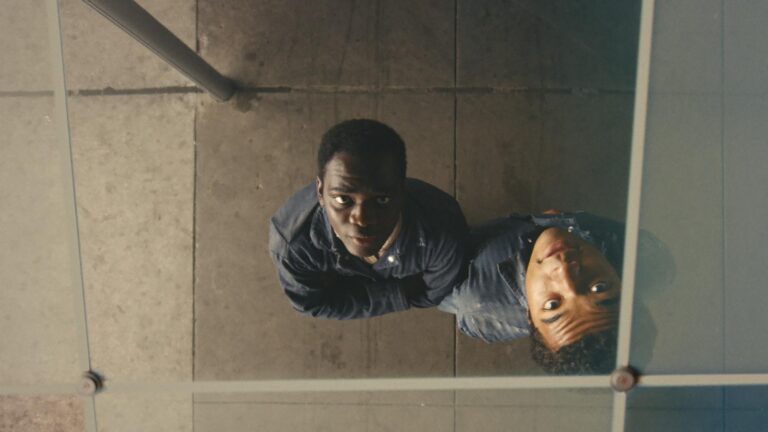
The scene where Hae Sung stands at the base of Nora's apartment building stairwell to gaze at her silhouette through warm light remains in my mind because it shows their deep separation. The physical separation between them exists but there is an additional form of distance that separates them. Song maintains this extended camera view which creates an uncomfortable feeling yet perfectly captures the scene.
People who reside in different time zones and different decades encounter what obstacles when they wish to develop romantic love for each other. The question Hae Sung asks about past life connections between them seems more like a defensive mechanism than romantic theory. The human mind uses this approach to handle situations which cannot be altered. The explanation remains basic. People develop beliefs about destiny because they cannot understand that life events depend solely on when and where they occur.
Song demonstrates through his work that immigration produces opposing feelings which people experience. Nora describes their relationship to Arthur as planting two trees in one container because their roots must find their correct position. The statement describes their marriage bond but it reaches further than that. People develop various identities because they experience life between multiple languages and various cities. The Na Young who stayed in Seoul would have married someone like Hae Sung. The Nora who writes plays in New York marries Arthur. The two versions of reality seem equally real to their respective viewers but remain completely beyond reach for each other.
The movie shows male emotional weakness through an unexpected story twist. The plain statement from Hae Sung about his pain from liking his husband's relationship with Nora creates a devastating effect. The scene lacks any dramatic elements or jealous outbursts. The character shows his emotion through a simple acknowledgment that he has no place to express it. Arthur demonstrates his own gentle feelings of insecurity throughout the story. The scene becomes unbearable when Arthur attempts to learn Korean because he understands he will never reach the part of Nora that thinks in an unfamiliar language.
The film shows its genuine psychological elements through its examination of human behavior when people fabricate false accounts of their past events. Nora has not seen Hae Sung since 1998 yet she maintains the memory of her twelve-year-old self who walked home from school in Seoul. The condition produces emotional buildup symptoms instead of showing any signs of developmental delays. Multiple self layers exist within the human mind which persist even after complete disappearance. Song guides their reunion through deliberate camera movements because he recognizes their most powerful dramatic moments emerge from their mutual recognition of each other. Or don't recognize. Or pretend not to.
Actually, that's not quite it. The film demonstrates that reconnecting with someone requires you to experience loss. When people reconnect with others they experience dual loss because they must let go of their genuine past and their imagined past identity.
Hae Sung reveals the core paradox of the film when he says "The truth I learned here is, you had to leave because you're you. And the reason I liked you is because you're you. And who you are is a person who leaves."The statement serves as both a confession of guilt and a declaration of forgiveness. Song shows his characters as typical individuals who selected their life directions which led them to this particular bar for their difficult conversation.
The Buddhist concept of In-Yun runs throughout the entire story because it teaches that all people who touch each other must share past life connections. The Buddhist teachings state that people who get married share eight thousand different life experiences. Song presents this concept as psychological building blocks instead of treating it as a precious idea. The concept explains why certain relationships seem meant to be even though they seem impossible to obtain. The concept might work in the opposite way. Through collective recognition of human longing In-Yun enables people to understand their unattainable desires.
Song uses his camera to show New York through the eyes of a Korean person. The city shows both its vast size and its restrictive nature because it provides unlimited choices yet seems to operate according to set rules. The camera retreats to show the three people as undefined shapes seated at their table but we understand their identities. We understand their complete relationship dynamics with each other. Or we think we do.
Arthur expresses his concern that Nora expands his world but she reduces his space while Hae Sung lives with his parents in a state of perpetual timelessness. The stairwell stays in my memory because there are certain gaps which cannot be bridged by walking up the stairs.